
writer: Jean de Dieu I
The arrest of Nicolás Maduro marks the most aggressive application of the Monroe Doctrine in the 21st century. By invoking this 200 year old policy, the U.S. has signaled a return to "sphere of influence" diplomacy, aimed directly at removing extra-hemispheric actors like China, Russia, and Iran.
President Trump’s characterization of this as the "Trump Corollary" suggests that the U.S. no longer views its role as merely protective, but as an active "manager" of regional stability. This shift effectively declares that any state harboring U.S. adversaries or facilitating "narco-terrorism" loses its right to sovereign non-interference.
Legal Analysis: Bypassing Immunity
The U.S. legal strategy to justify the abduction of a sitting president rests on three controversial pillars:
Non-Recognition: Washington argues that because the 2024 and 2025 elections were fraudulent, Maduro was a "usurper" rather than a legitimate head of state, thus forfeiting Head-of-State Immunity.
The Ker-Frisbie Doctrine: U.S. courts traditionally hold that the manner in which a defendant is brought to court (even if through forcible abduction) does not deprive the court of jurisdiction to try them.
The "Narco-Terrorism" Label: By framing the Venezuelan government as a criminal cartel (the Cartel de los Soles), the U.S. shifts the context from international diplomacy to domestic law enforcement, treating the military raid as a "judicial extraction."
BRICS Reaction: Defending the Multipolar Order
For the BRICS+ nations, this operation is a direct assault on the "Multipolar World Order" they champion.
China and Russia: Beijing and Moscow view the arrest as "pure piracy" and a violation of the UN Charter. They fear this sets a precedent where the U.S. can unilaterally "decertify" any leader who challenges its interests.
Strategic Response: In immediate retaliation, Chinese, Russian, and Iranian warships launched joint naval drills in the South Atlantic (hosted by South Africa).
De-Dollarization: The arrest has accelerated BRICS' efforts to create an alternative financial architecture. If the U.S. can seize a leader and freeze a nation's oil assets via the dollar-clearing system, BRICS members see no choice but to migrate toward the BRICS Bridge payment system.
Economic Reality: The "Oil Gap"
Despite the "regime change," Venezuela's oil industry remains in a state of paralysis.
Sanctions Stasis: While Maduro is gone, the OFAC sanctions remain in place. U.S. companies cannot simply "take over" the infrastructure without complex legal licenses and billions in new capital.
Infrastructure Decay: Experts estimate it will take over $100 billion and a decade of stability to return Venezuela to its 3-million-barrel-per-day peak.
Debt Conflict: Venezuela owes China approximately $10 billion, often paid back in oil. The U.S. intention to "run" the industry creates a high-stakes legal battle over who gets paid first: U.S. oil companies or Chinese state creditors.
Conclusion: Stability or a "Black Hole"?
The arrest of Nicolás Maduro has successfully removed a long-standing U.S. adversary, but it has created a dangerous power vacuum. By treating a sovereign nation as a criminal enterprise, the U.S. has alienated much of the Global South and unified the BRICS bloc against Western "interventionism."
If the U.S. fails to facilitate a rapid, peaceful transition to a recognized civilian government, Venezuela risks becoming a "security black hole" a territory where military factions and criminal organizations compete for control, further destabilizing the very region the Monroe Doctrine was intended to protect.
The Caracas Gambit: Is Venezuela the New Frontline of the Cold War? -Deeply Research IJD
From the halls of a New York courtroom to the oil fields of Lake Maracaibo, the capture of Nicolás Maduro has pushed the U.S. and BRICS to the brink of a systemic divorce.
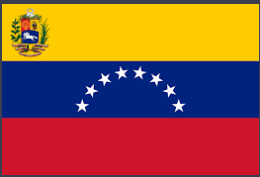
From the halls of a New York courtroom to the oil fields of Lake Maracaibo, the capture of Nicolás Maduro has pushed the U.S. and BRICS to the brink of a systemic divorce.



Comments
Will the United States’ military power be what ends the world?
Venezuela’s crisis shows how power struggles hurt ordinary people. U.S. sanctions, combined with internal mismanagement, have damaged the economy, while global rivalries turn the country into a political battlefield. Dialogue and cooperation—not punishment—are the real solutions.