
The Russo-Japanese War, fought between 1904 and 1905, marked a turning point in both Asian and global history. It was a clash between the expanding Russian Empire and the rapidly modernizing Empire of Japan, each seeking dominance in East Asia. The conflict arose from long-standing tensions over control of Korea and Manchuria, two regions seen as vital for strategic, economic, and political reasons. As Russia pushed its influence deeper into Manchuria and maintained control of Port Arthur, Japan viewed these moves as direct threats to its security. Diplomatic negotiations failed, and Japan concluded that only military action would prevent further Russian expansion.
Major Events of the War
Several major events defined the course of the Russo-Japanese War and demonstrated Japan’s military strength:
1. Surprise Attack on Port Arthur (February 1904):
Japan launched a sudden nighttime assault on the Russian fleet anchored at Port Arthur, marking the beginning of the war and instantly crippling Russian naval power.
2. Battle of the Yalu River (April 1904):
Japan’s first major land victory, proving its army could defeat European forces on the battlefield.
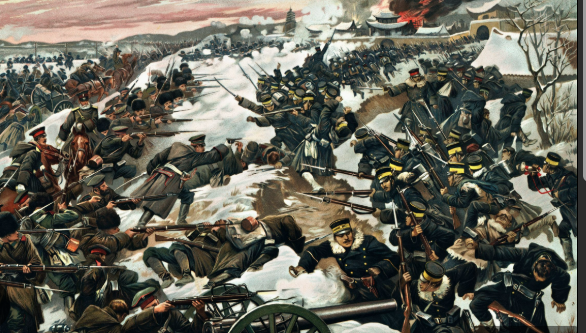
3. Siege of Port Arthur (1904–1905):
One of the most brutal sieges of the war, where Japanese forces slowly tightened control until the Russian garrison surrendered.
4. Battle of Liaoyang (August–September 1904):
A large-scale land battle in Manchuria in which the Japanese outmaneuvered the Russians, forcing them to retreat.
5. Battle of Mukden (February–March 1905):
One of the largest land battles in modern history before World War I. Japan won again, pushing Russian forces northward.
6. Battle of Tsushima (May 1905):
The decisive naval clash in which Admiral Tōgō’s fleet destroyed the Russian Baltic Fleet, shocking the world and solidifying Japan’s dominance at sea.
These events collectively showcased Japan’s superior planning, training, and strategic mobility, while exposing the weaknesses of the Russian military.
Continuing with the main narrative of the war, the fighting demonstrated Japan’s ability to wage modern warfare across both land and sea. Victories such as Mukden and especially Tsushima highlighted Japan’s rapid modernization and military discipline. Meanwhile, Russia suffered repeated defeats, low morale, and logistical challenges due to the long supply lines stretching across Siberia.
The war ended with the Treaty of Portsmouth, mediated by U.S. President Theodore Roosevelt. Under its terms, Japan gained influence over Korea, access to southern Manchuria, and control of Port Arthur, while Russia was forced to retreat from the region. Although Japan did not receive all the reparations it desired, it emerged as a recognized global power. Russia, in contrast, faced humiliation at home, contributing to political unrest and helping ignite the Russian Revolution of 1905.
The broader significance of the Russo-Japanese War extends beyond the battlefield. It was the first time in modern history that an Asian nation defeated a major European empire, challenging long-standing assumptions about racial superiority and military dominance. Japan’s victory propelled it into the ranks of world powers and encouraged further imperial expansion, influencing events that would eventually lead to World War II in the Pacific. The conflict also demonstrated the growing importance of industrial strength, naval modernization, and strategic intelligence in modern warfare.
In conclusion, the Russo-Japanese War was more than a regional struggle; it reshaped global power dynamics, weakened the Russian Empire internally, and elevated Japan to a major imperial force. With its major events and decisive outcomes, the war left a lasting legacy that shaped international relations for decades to come
Author : IRAFASHA Jean de DIEU
Russo-Japanese War (1904–1905) Deeply Research IJD



Comments